
How to Loot a Country, Cry Civilizational Erasure, and Blame the Poor
Sir Jim Ratcliffe, Britain’s richest man, recently sat down with Sky News to explain why Britain is failing. He did not mention capital flight. He did not mention underinvestment or the systematic erosion of the tax base. He mentioned immigrants.
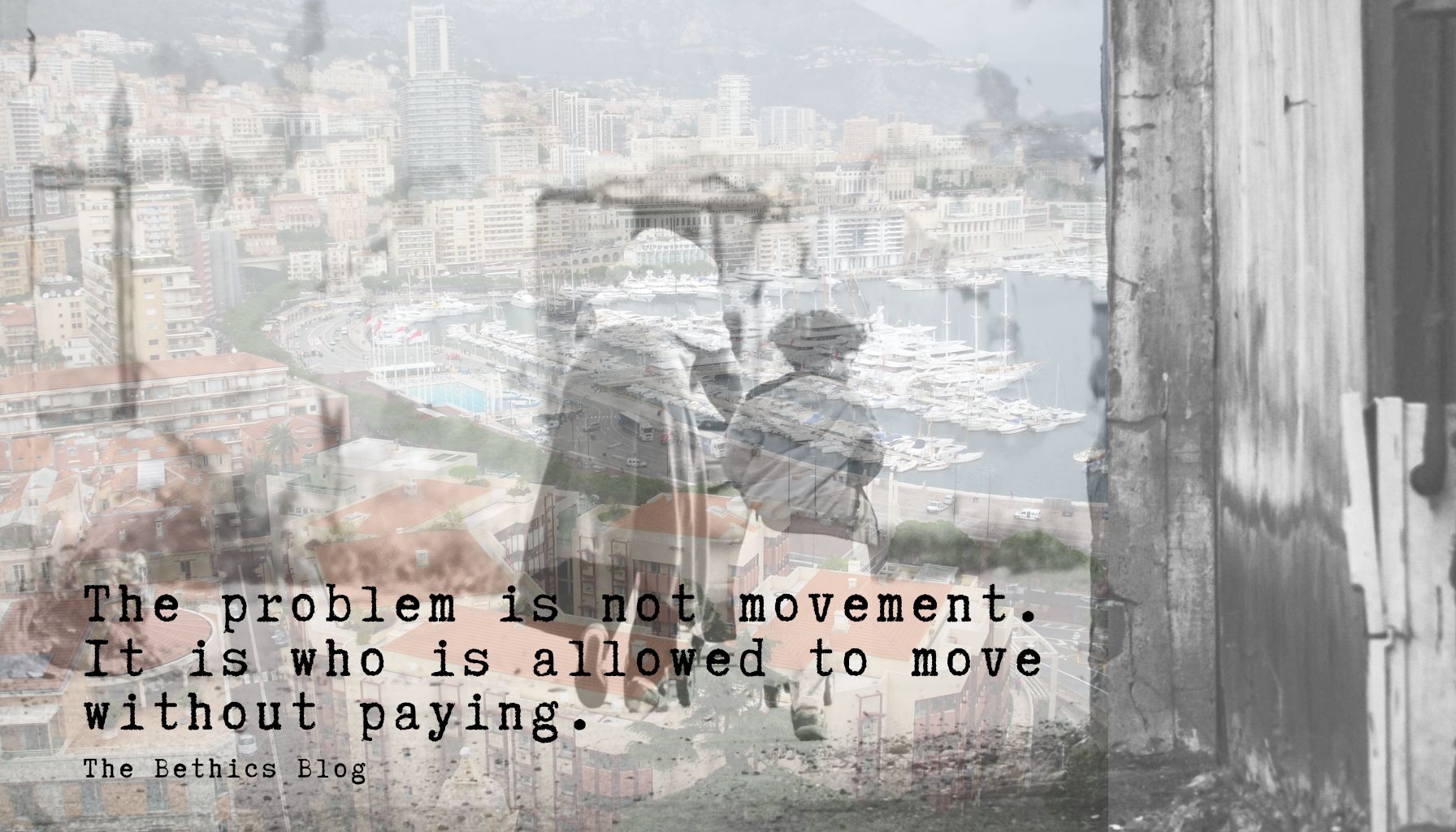
He delivered this diagnosis from Monaco. A location that serves one purpose. It allows extreme wealth to detach itself from public obligation. When a man who has removed billions from the British tax system lectures Britain about the people arriving with nothing it is distraction pretending to be concern.
Manufacturing a Crisis That Doesn’t Exist
Ratcliffe claimed the UK population had risen from 58 million in 2020 to 70 million today. This is false. According to the Office for National Statistics, the UK population was approximately 66.7 million in 2020 and just under 69.5 million in 2025. Britain last had a population of 58 million in the mid-1990s. He invented more than ten million people.
This is a political fabrication. Civilizational panic requires inflated numbers, and when reality does not supply them, they are manufactured. The function of the lie is to transform ordinary demographic change into an existential emergency. It makes the discussion of policy impossible by replacing it with fear.
His warnings about benefit claimants follow the same logic. Millions of Universal Credit recipients are in paid employment. Others are disabled, long-term sick, or unpaid carers performing work the state would otherwise need to fund. The welfare bill is not evidence of a culture of dependency. It is evidence of an economy that increasingly fails to pay people enough to live on. An economy that has made men like Ratcliffe extraordinarily wealthy. There is a particular cruelty in this argument. Low wages force the state to subsidise incomes through benefits. That subsidy flows, in practice, directly to employers. Ratcliffe’s class benefits from this structure. Blaming the people at the bottom of it is not fiscal discipline. It is deflection.
Colonisation, Properly Defined
Colonisation is often discussed as a historical episode, but its mechanics are well understood. It is not the movement of people. It is a system of extraction.
In societies still living with its consequences, colonisation is visible in infrastructure designed to move resources outward rather than support local development. It appears in legal and financial frameworks that protect extraction while externalising costs. It persists as economic dependency long after formal control ends. Public systems weaken, accountability moves upward, and blame is redirected downward toward the most visible and least powerful groups.
What has changed is not the logic, but the agent. Colonisation is no longer organised primarily through states expanding outward. It is organised through capital withdrawal upward. Flags and governors have been replaced by lawyers, tax treaties, and residency regimes. The function remains the same.
That pattern should sound familiar. Because it is now operating inside Britain, and the agents are not migrants.
When extreme wealth is built using British labour, British infrastructure, and British legal protections, and then detached from British taxation through offshore residency, the result is not merely inequality. It is extraction. Value flows outward. Obligations disappear. Costs remain local. The public systems that made that wealth possible are left underfunded and then criticised for failing.
Ratcliffe is not warning about colonisation. He is an example of its contemporary form. The trick is persuading the public to focus on the movement of people while the movement of capital goes unchallenged. For a deeper exploration of how globalisation has produced a “selective freedom” in which capital moves without limits while people face growing barriers, see Globalization’s Selective Freedom on Bethics.
Following the Money
Since relocating to Monaco, Ratcliffe is estimated to have avoided several billion pounds in UK taxation. In the most recent year, approximately 110,000 people claimed asylum in Britain. The fiscal impact of one billionaire’s tax exit dwarfs the entire annual cost of processing and supporting those claims.
The money left. The strain remained. The blame was redirected.
For a wider look at how extreme wealth shapes democracy, weakens public accountability, and concentrates power while avoiding civic obligation, see Billionaires, Capitalism, and the Crisis of Democracy on Bethics.
This is how elite narratives function. Cultural fear is a more effective political instrument than economic accountability. Brexit proved this. When people are frightened about identity and belonging, they are less likely to scrutinise ownership, extraction, and the systematic withdrawal of the wealthy from collective life. The same logic now drives political discourse across the English-speaking world. This applies in the United States as much as in Britain. Immigration panic consistently substitutes for serious engagement with the concentration of wealth and the erosion of public accountability. “Civilizational erasure” is not an analytical concept. It is a political instrument. It redirects anger away from those who have removed themselves from collective responsibility and toward those with the least power to respond.
What Is Actually Being Erased
Something is genuinely being erased in Britain. But it is not culture.
What is eroding is the expectation that extreme wealth carries obligation. What is disappearing is the willingness to fund the systems that made that wealth possible. What is breaking down is the basic social contract, the understanding that prosperity is sustained collectively, not extracted individually, and then defended with scapegoats.
Migration is not an emergency response to ageing populations. It is how societies have always renewed skills, ideas, labour, and culture. People who are welcomed invest more, socially and economically. Exclusion wastes human capacity while inclusion encourages it. A civilization that is secure in itself does not panic about newcomers. It includes them.
Civilisations collapse when elites stop paying in and deflect accountability onto the powerless. They collapse when the logic of extraction displaces the logic of mutual benefit, and when resentment is carefully cultivated to ensure that accountability never arrives.
But the deeper question is not about immigration at all. It is about who is allowed to belong to a place without paying for it. Migrants, almost by definition, are not that group. They come to build, to work, to contribute. They do not come to extract. The man in Monaco is a different story entirely, and he is not alone. This is what colonisation looks like once capital no longer needs flags.

Leave a Reply